Calm, Confident & Accessible: Designing a Wetroom That Feels Like Home
When adapting a bathroom for ageing or reduced mobility, safety is often the priority — but how the space feels matters just as much. For this project, the goal was to create a wetroom that supported everyday use while offering a calm, welcoming environment that felt anything but clinical.
The result is a space that balances accessibility, comfort, and thoughtful design, helping our client feel confident and relaxed in their daily routine.
Why Colour Matters in Accessible Bathroom Design
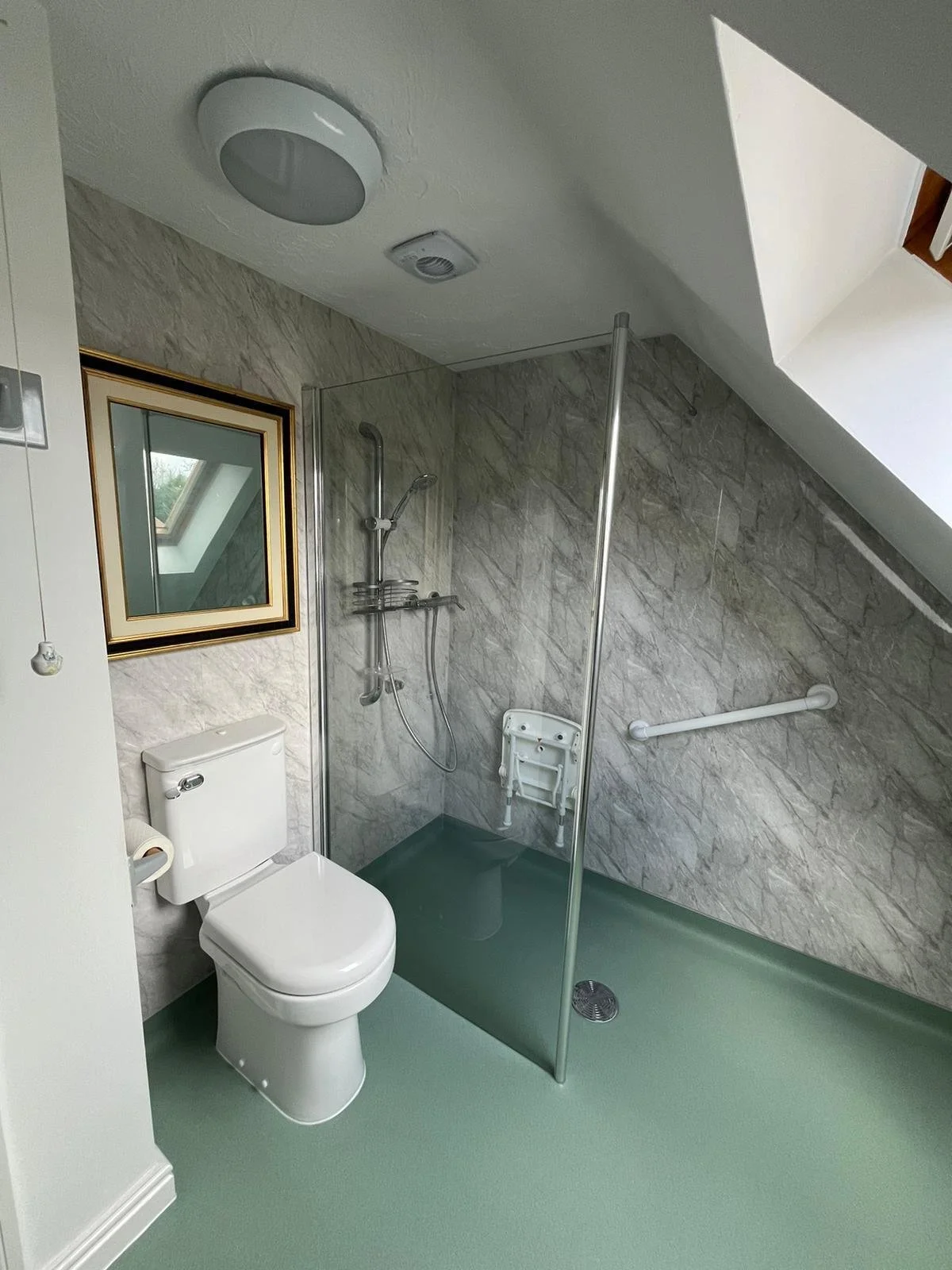
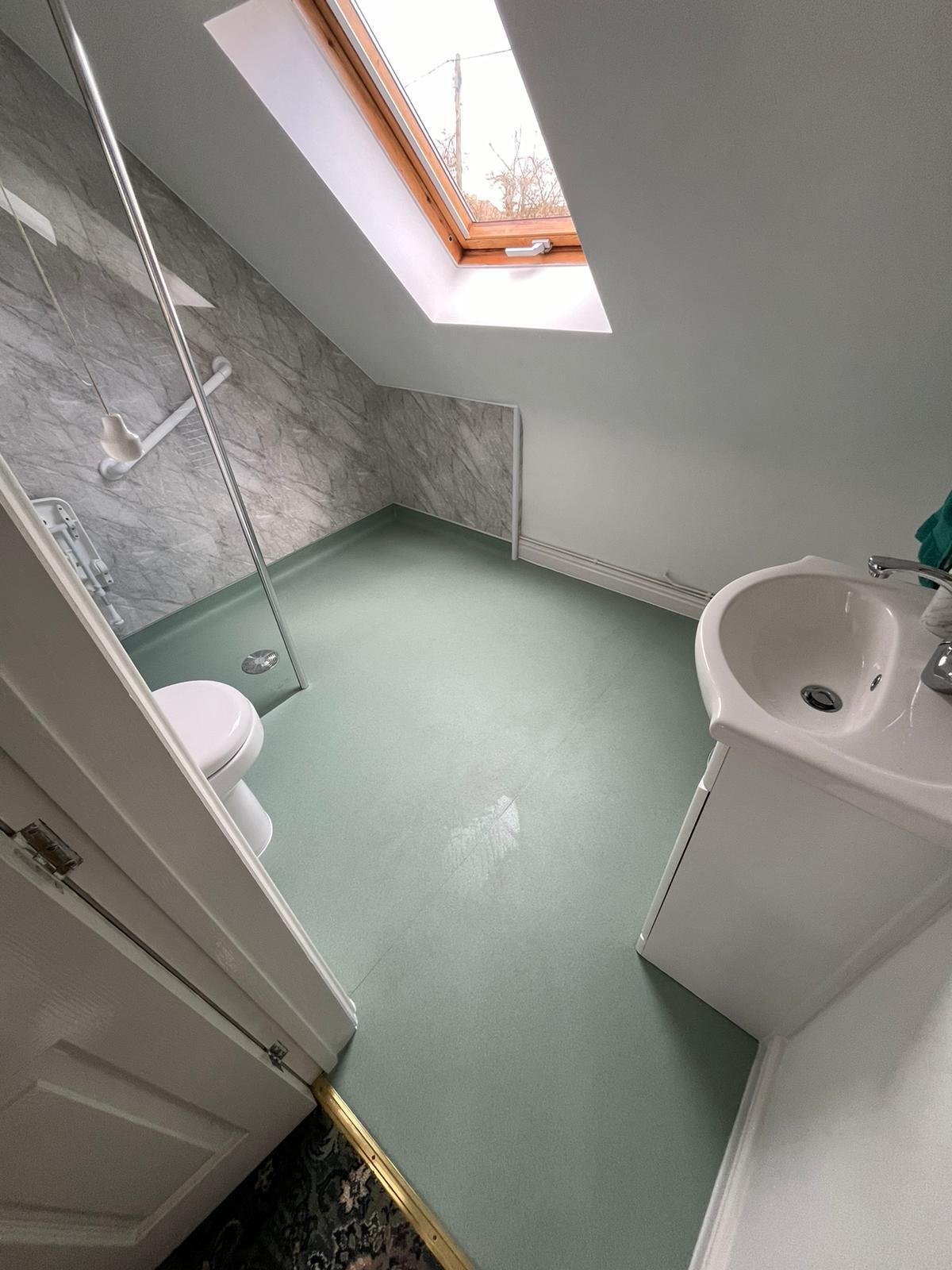
One of the defining features of this wetroom is the sage green slip-resistant flooring. Soft, natural tones like this can have a calming effect, which is particularly important for older adults or individuals living with long-term health conditions.
From a practical perspective, slip-resistant flooring plays a vital role in bathroom safety — especially for seniors and those with balance or mobility challenges. The added grip helps reduce the risk of slips, while the consistent colour provides clear visual definition of the space, supporting spatial awareness.
This project shows that safety flooring doesn’t need to look harsh or institutional. With the right colour choice, it can enhance both function and atmosphere.
A Level-Access Wetroom for Everyday Ease
The level-access wetroom layout removes steps and thresholds, making the space easier to use for anyone with reduced mobility or who may need support getting in and out of the shower. This kind of design is particularly beneficial for people who want to continue living independently in their own homes as they age.
A fold-down shower seat was included to provide support when needed, allowing the user to sit comfortably while showering. When not in use, it folds away neatly to keep the space open and uncluttered.
Supporting Movement With the Right Fixtures
A raised-height WC was installed to reduce strain on the knees and hips — a small change that can make a significant difference for people living with arthritis, joint pain, or reduced strength. These kinds of adaptations help maintain independence and make everyday tasks feel more manageable.
Each element of the wetroom was positioned with movement in mind, ensuring the layout worked naturally with the way the space would be used.
A Bathroom That Feels Reassuring, Not Restrictive
Accessible bathrooms should feel supportive, not limiting. By combining soft colour choices, practical features, and a clean, modern finish, this wetroom feels like a comfortable part of the home — not a reminder of changing mobility.
For many seniors and people with disabilities, feeling relaxed and confident in the bathroom is key to maintaining dignity and independence.
Thinking About a Wetroom Adaptation?
Whether you’re planning ahead, adapting a bathroom due to changes in mobility, or supporting a loved one, thoughtful design can make a lasting difference to daily life.
📞 Call us on 0800 496 1495 or email info@assuredbathing.co.uk to talk through your options. We’re here to design bathrooms that support safety, independence, and comfort — without compromising on style.