Accessible Bathrooms That Don’t Look Clinical: Designing With Personality in Mind
One of the most common concerns we hear from seniors and people living with mobility challenges is this: “I want my bathroom to be safer — but I don’t want it to look like a hospital.”
For this project, that balance between accessibility, safety, and personal style was at the heart of every decision.
Designing for Safety Without Losing Character
The brief was to create a fully accessible wetroom that would support daily use while remaining warm, modern, and reflective of the client’s personality. This is particularly important for older adults and people with reduced mobility, where confidence in the bathroom plays a huge role in maintaining independence.
Rather than defaulting to neutral or clinical finishes, the design embraced colour and texture — proving that accessible bathrooms can feel expressive and welcoming.
Slip-Resistant Flooring That Makes a Statement
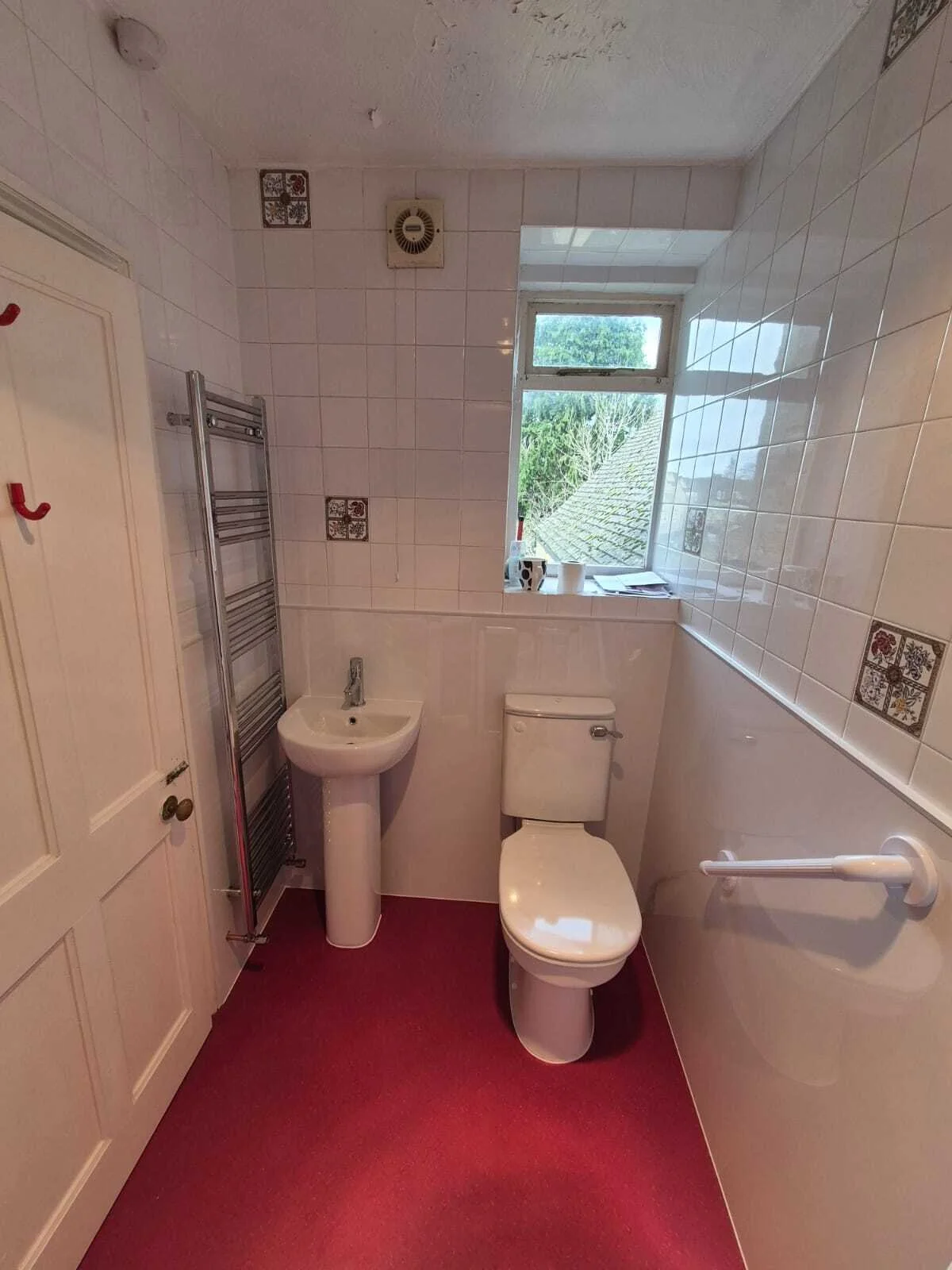
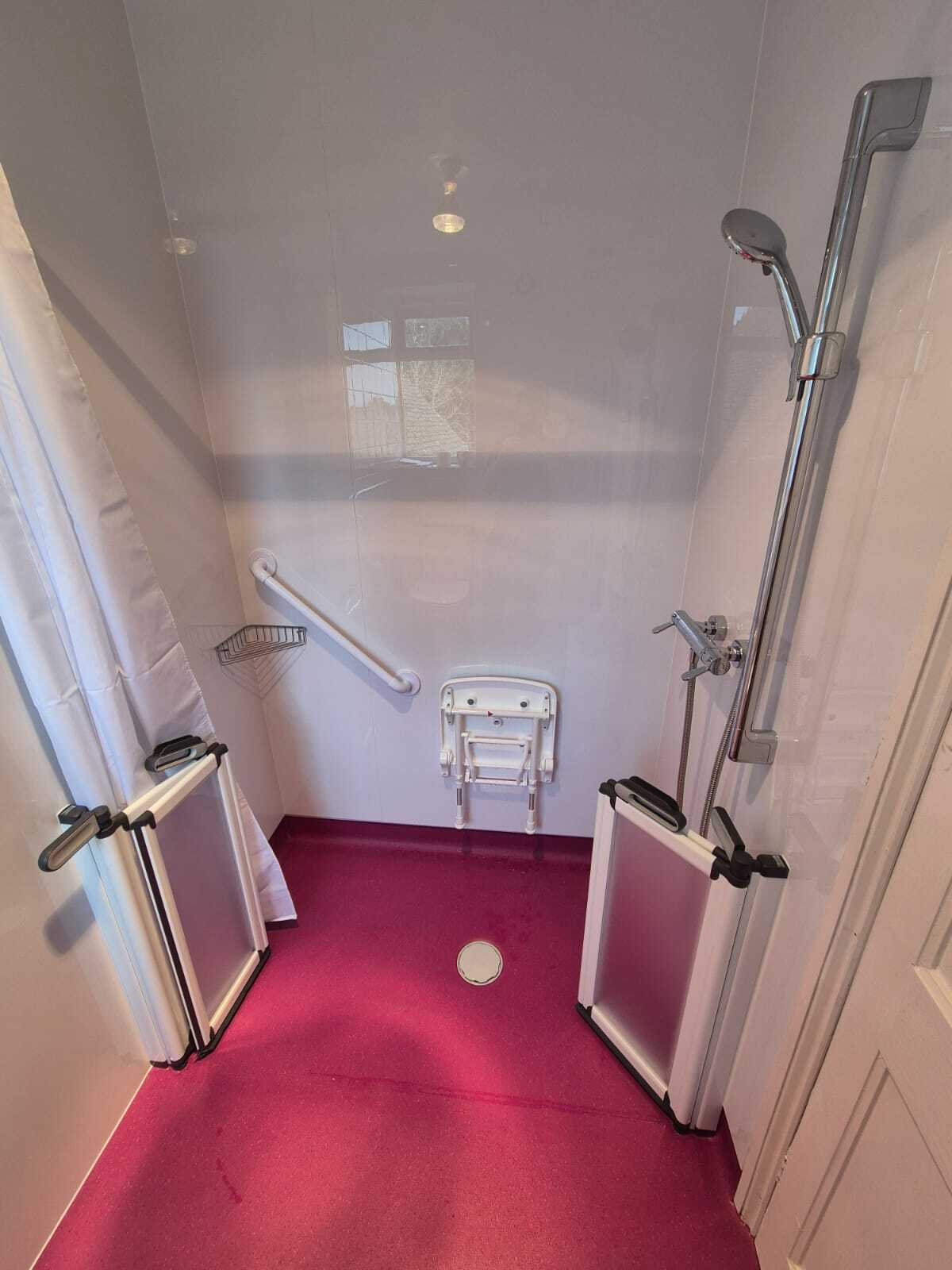
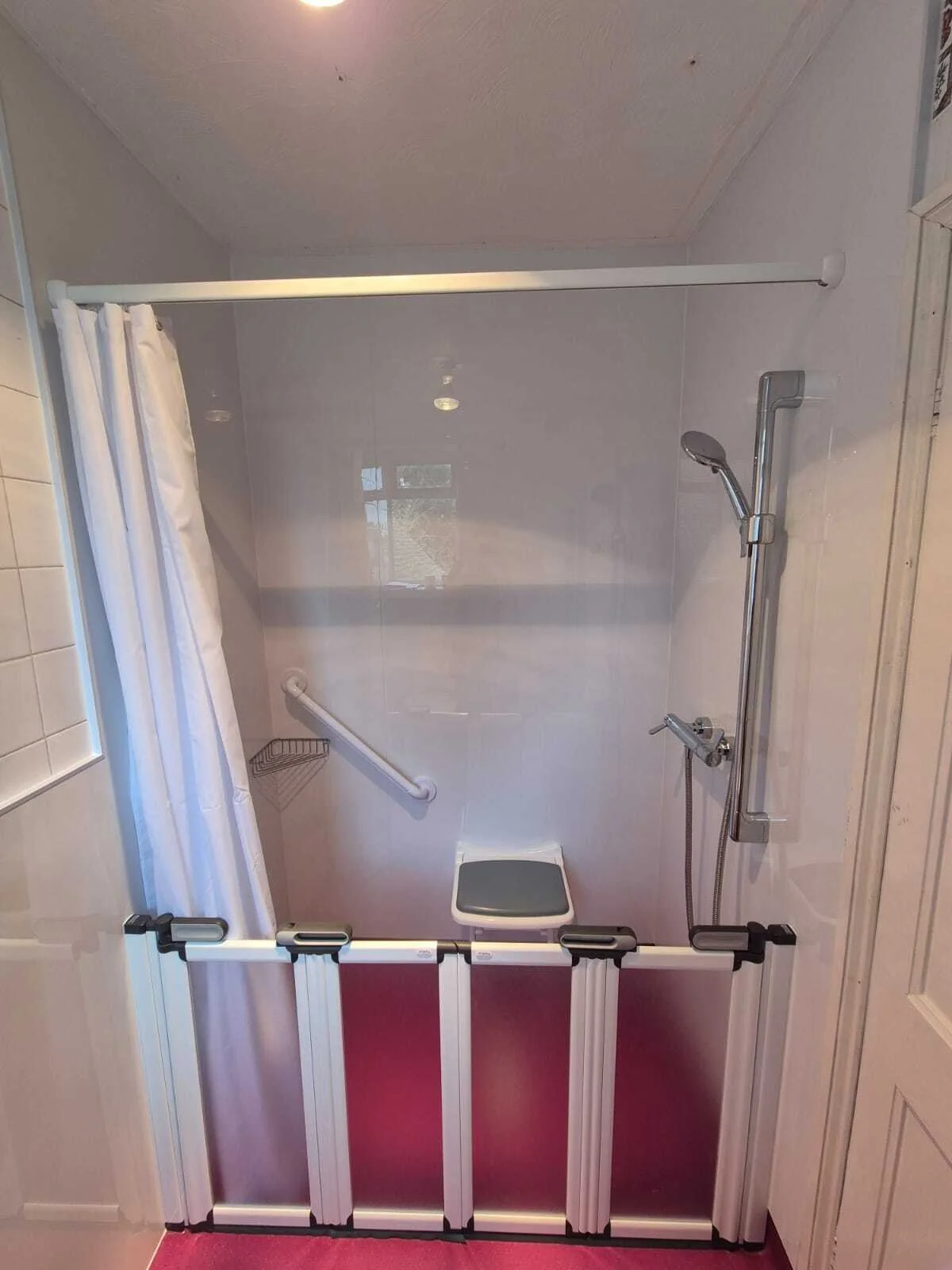
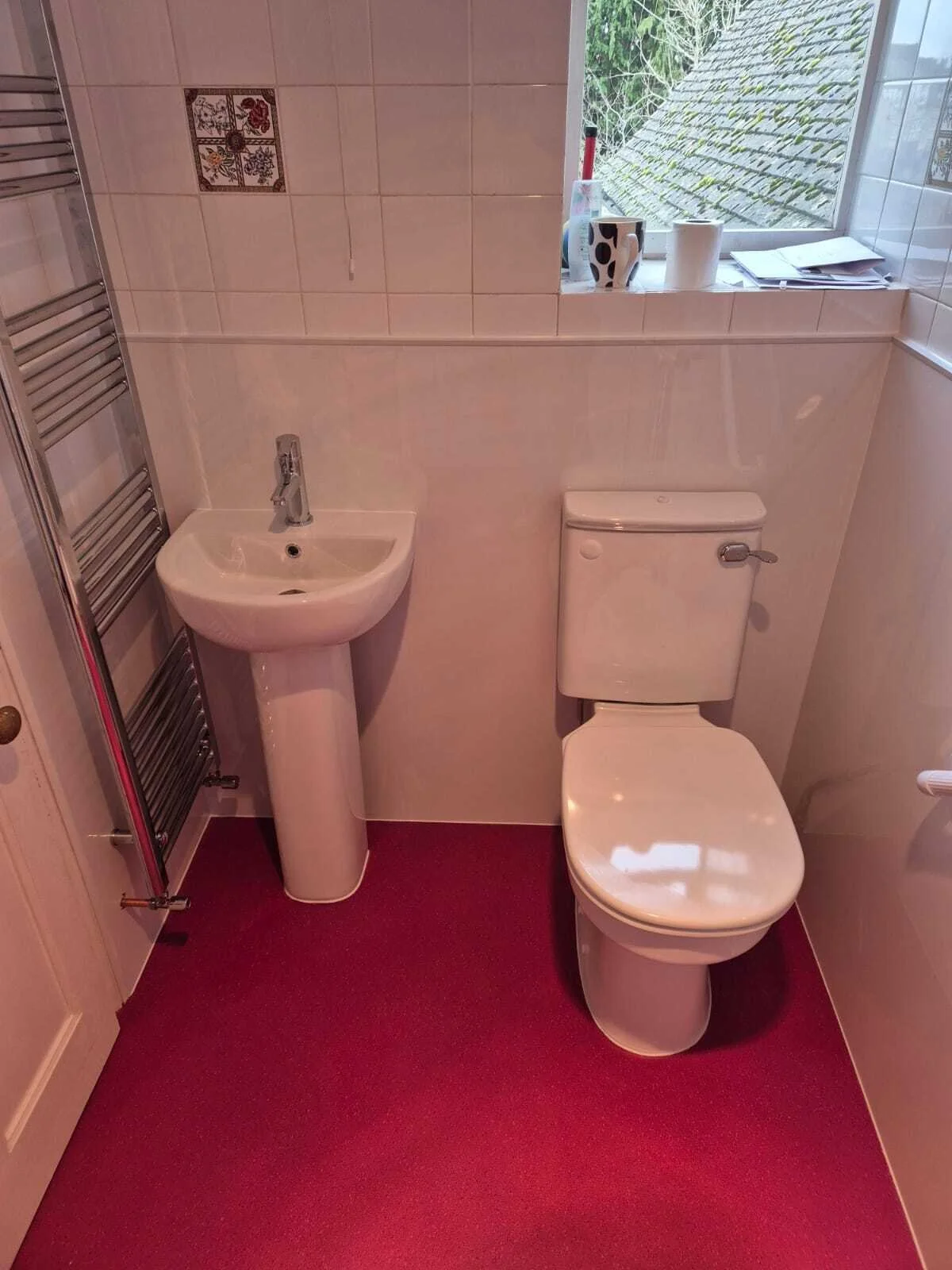
A standout feature of this wetroom is the bold red slip-resistant flooring. Safety flooring is essential in wet environments, especially for seniors and individuals with balance or mobility issues, as it provides grip even when wet and reduces the risk of falls.
What this project shows, however, is that slip-resistant flooring doesn’t have to fade into the background. By choosing a vibrant colour, the floor became a design feature in its own right — improving visibility, aiding spatial awareness, and adding character to the room.
For many people with visual impairment or reduced depth perception, strong colour contrast can also make a space easier and safer to navigate.
A Wetroom Designed Around Real Movement
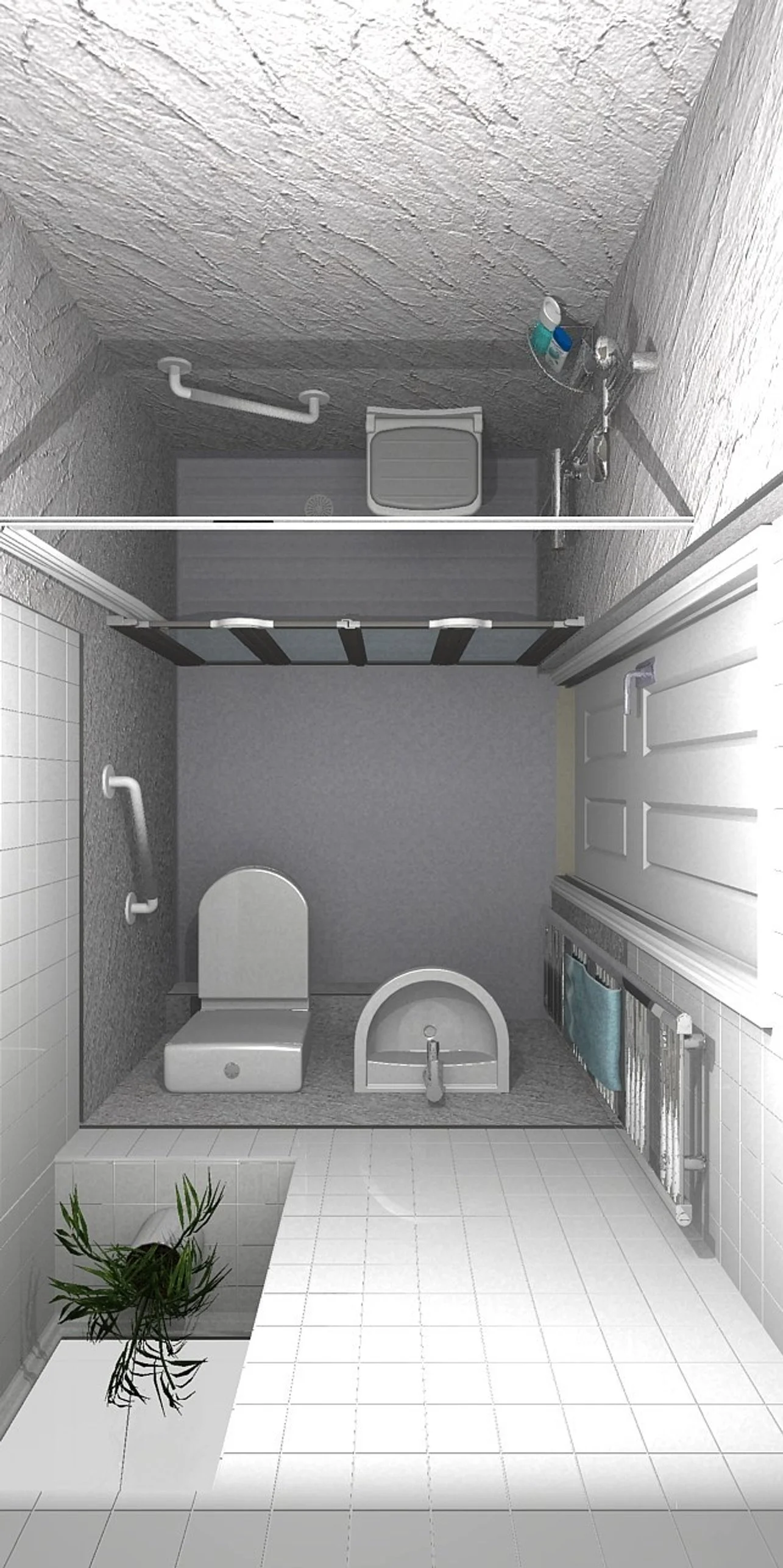
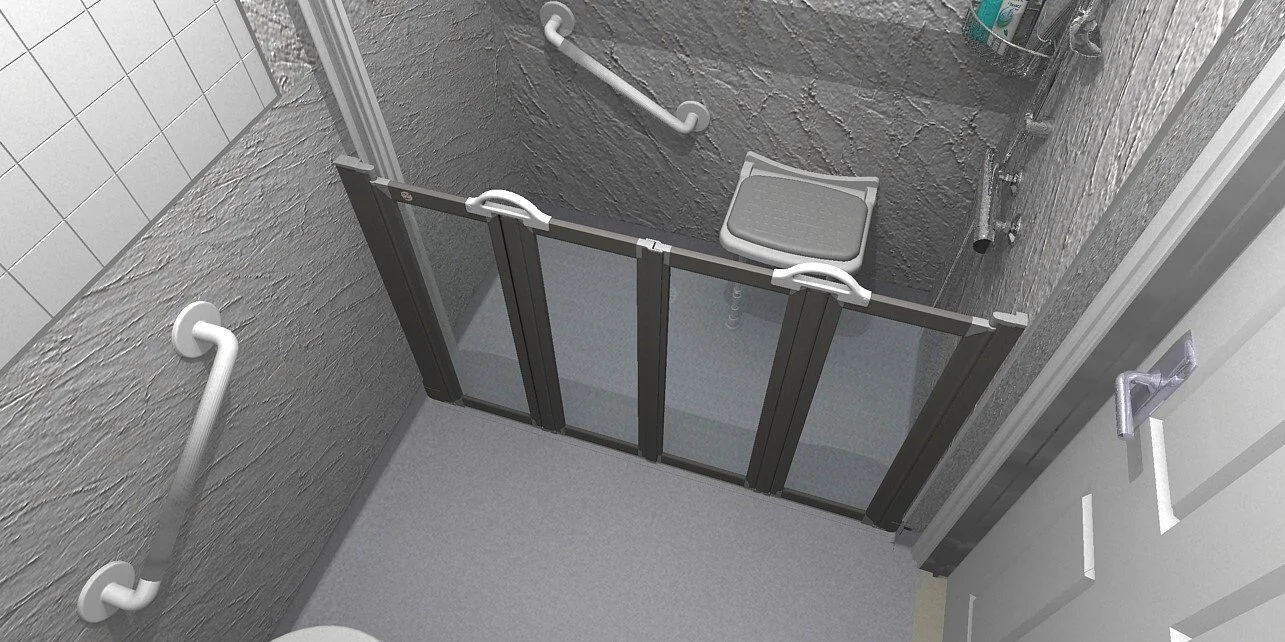
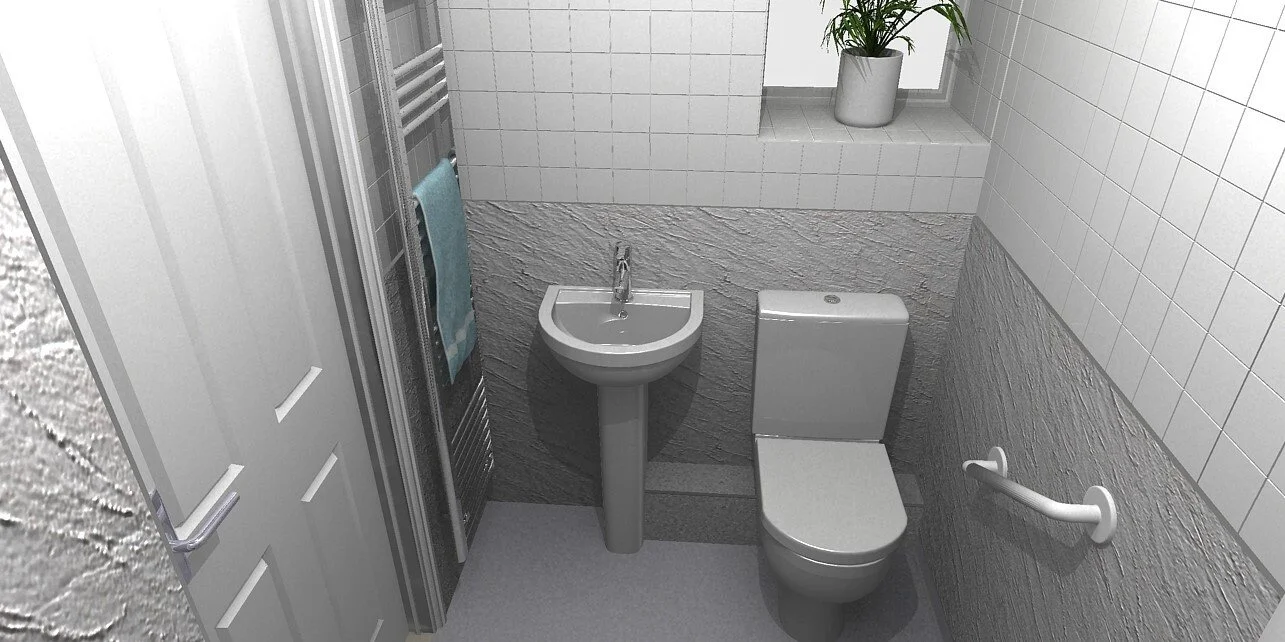
The level-access wetroom layout removes steps and thresholds, making it easier for anyone using mobility aids or needing additional support. A raised-height WC was installed to reduce strain on hips and knees, while grab rails and a fold-down shower seat were positioned based on how the space would actually be used — not just where fittings traditionally go.
These details are especially important for ageing clients or those living with long-term conditions, where everyday movements can become more challenging over time.
Visualising the Bathroom Before It’s Built
To help bring the design to life, 3D visuals were shared before work began. This allowed the client to see how the finished bathroom would look and feel, offering reassurance that the final result would be both practical and visually appealing.
For many seniors and families planning home adaptations, being able to visualise the end result reduces uncertainty and helps ensure the space feels like home — not a compromise.
Accessibility Should Feel Personal
An accessible bathroom should support independence, dignity, and safety — but it should also reflect the person using it. Colour, layout, lighting, and finishes all play a role in how comfortable and confident someone feels in their own space.
This project is a strong reminder that bathroom adaptations for seniors and people with disabilities don’t have to sacrifice style. With thoughtful design, accessibility and personality can work hand in hand.
Thinking About Adapting Your Bathroom?
If you or a loved one are considering a bathroom adaptation due to age, reduced mobility, or disability, good design makes all the difference — not just for safety today, but for comfort and confidence in the years ahead.
📞 Call us on 0800 496 1495 or email info@assuredbathing.co.uk to talk through your options. We’re here to help design bathrooms that support independence — without losing what makes a home feel like yours.